Glass Price per Square Foot in Pakistan: Types, Thickness, Colours and What Decides the Cost
 Nasir MahmoodFounder & Developrt, Aluminium Master
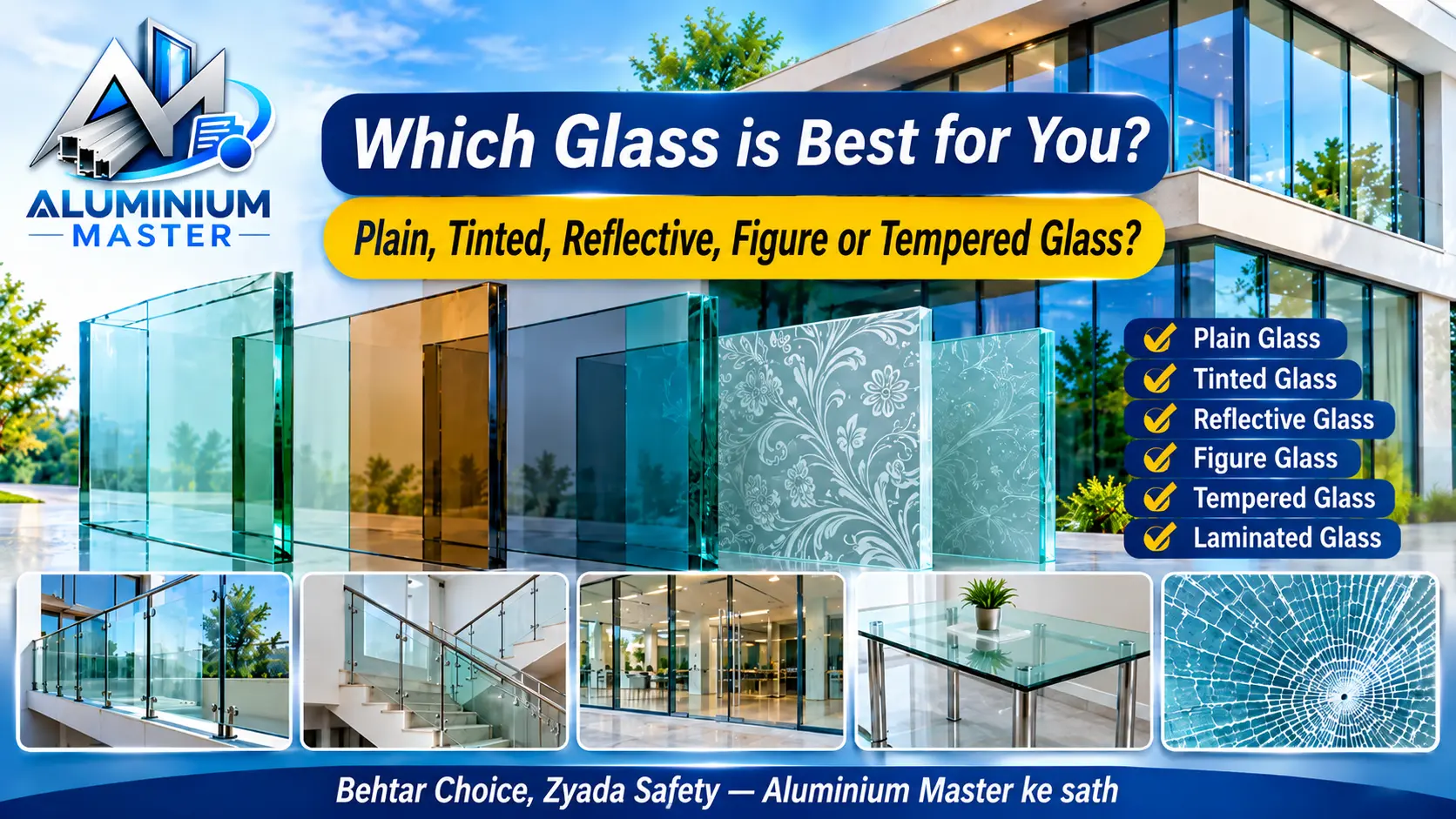
Glass is used almost everywhere in our homes and buildings:
- windows and doors;
- shop fronts;
- terraces and stair railings;
- dining tables and other furniture.
When people go to the market to buy glass or have it fitted, the first question is usually: what is the price of glass per square foot?
There is no single fixed answer. Glass comes in many thicknesses, colours, designs and qualities. The price also depends on manufacturing, availability, your city, transport, and any extra work done on the glass.
In Pakistan, leading glass manufacturers generally produce glass from 3mm to 12mm thick, and special glass for specific uses is also available. Here is what decides the price of glass.
1. Glass Thickness
Thickness is the most basic factor in the price of glass. The common thicknesses in the market are 3mm, 4mm, 5mm, 6mm, 8mm and 12mm.
As thickness goes up, the price per square foot usually goes up too. Each thickness has its own uses, for example:
- Windows: usually 5mm or 6mm.
- Terraces, stair railings and shop fronts: may need 8mm or 12mm.
So thickness alone does not tell you the price. You also need to consider where the glass will be used and for what purpose.
2. Clear, Tinted and Reflective Glass
Glass comes in different colours. In Pakistan, brown, green, blue and grey are the most common.
There are two main types of coloured glass:
- Plain tinted glass: simple coloured glass, often called plain colour glass.
- Reflective glass: commonly called one-way glass.
Reflective glass works on the difference in light between its two sides. During the day, when it is brighter outside than inside:
- a person inside can usually see out;
- it is hard to see in from outside.
That is why it is sometimes used instead of curtains. Reflective glass also cuts glare and reflects part of the sun’s heat, which helps in sunny rooms.
But reflective glass is not a permanent or complete privacy screen. Its effect depends on the light. At night, when the lights are on inside and it is dark outside, this reverses, and a person outside can see in. So it is best to use curtains or blinds on these windows at night.
Plain tinted glass and reflective glass are priced differently, so ask about both and choose based on your needs.
3. Plain Glass and Figure Glass
Windows and doors do not use only plain glass. Patterned glass has been in the market for a long time, and it is usually called figure glass.
Figure glass comes in many patterns. Well-known designs in the market include Millennium, ABC, Chatai and Flora. Some of these designs have been in use for years and are still popular for homes, doors and other building work.
Figure glass also comes in different colours and finishes, such as:
- grey;
- brown;
- other colours;
- silver and golden finishes.
Because the pattern blurs the view while letting light through, figure glass is also a simple and economical way to get privacy in bathrooms and similar areas.
Figure glass is usually around 4mm thick, and some types can cost less than float glass. The price depends on the design, thickness, quality and availability.
Plain coloured glass is now used more and more in home windows, because people prefer modern, clean window designs. Plain glass can give the outside of a house a neat, attractive look.
4. Which Glass Is Used in Aluminium and uPVC Windows?
Aluminium and uPVC windows usually use 5mm or 6mm glass. This can be:
- clear glass;
- plain tinted glass;
- reflective glass.
Iron sliding or openable windows, on the other hand, more often use patterned figure glass.
The glass should not be chosen on the window material alone. Also consider:
- the size of the window;
- its design;
- where it is installed;
- the strength it needs.
Large windows and special jobs need more care in choosing the thickness and type of glass.
For a full idea of what a finished window costs, read our guide on aluminium window price in Pakistan.
5. Glass for Terraces, Stair Railings and Shop Fronts
You cannot use the same glass everywhere. Where glass takes more pressure or weight, or has to meet safety requirements, the right thickness and the right type are essential.
For example:
- Terraces: 8mm or 12mm, depending on the need and design.
- Stair railings: usually 12mm, chosen to suit the specific design and engineering.
- Shop fronts: large glass fronts usually use 12mm.
- Other safety work: tempered or laminated glass, depending on the location, size and safety needs.
For railings, terraces and glass doors, thickness alone is not enough. These are places where broken glass can hurt someone, so safety glass, meaning tempered or laminated glass, should be used. To learn more, read our articles on tempered vs non-tempered glass and laminated glass.
Besides clear glass, these jobs can also use grey, brown and green glass. Tinted glass usually costs more than clear glass.
Not every thickness and colour is available in every city. For example, 12mm brown, 12mm grey, 12mm green and some 8mm tinted glass may not be in stock in smaller cities, and sometimes has to be brought from bigger cities.
6. How Your City and Availability Affect the Price
The price of glass is not decided only by how it is made and how thick it is. Availability matters a lot too.
Transport. Glass cannot be loaded onto any truck or van like ordinary goods. It needs special vehicles and careful handling to travel safely. If a particular glass has to come from another city, the transport cost is added to its price.
Storage. Glass cannot be kept in an ordinary shop like other goods. It needs a proper warehouse, storage racks and safety arrangements.
Stock. Some glass types are regular items that sell all the time. Some colours or thicknesses sell slowly. Shopkeepers still have to keep these slow-moving items in stock, which ties up their money, warehouse space and shop costs. All of this eventually shows up in the price.
Common glass is widely available, for example:
- 12mm clear;
- 8mm clear;
- common 5mm and 6mm tinted glass.
That is why prices for these differ relatively little from one shop to another.
7. Tempered Glass Price
The price of tempered glass depends on its thickness, quality and availability. It also matters a lot whether your city has a tempering plant.
Tempered glass is made by putting ordinary glass through a special industrial process. These plants are not available in every city, so in some places the glass is sent to another city to be tempered and then brought back. This adds transport and other costs, and can raise the price per square foot.
Where a tempering plant is available locally, the price can be lower. The actual rate depends on:
- the plant’s charges;
- the glass thickness;
- the size;
- the type of order.
8. Laminated Glass and Other Special Types
Laminated glass is usually considered a type of safety glass. It is made by bonding two or more sheets of glass with a special interlayer between them. Its price depends on:
- the glass thickness;
- the number of layers;
- the interlayer;
- the overall quality.
Other special glass types are also priced differently from ordinary plain glass. So if you need tempered, laminated or another special glass for a particular job, quoting the thickness alone is not enough to get a correct rate. You need to give the full details.
9. Cutting, Polishing and Extra Work
Once the glass is bought, it has to be shaped to the required size and design. This can include:
- cutting;
- edge polishing;
- bevel (tukar) polishing;
- holes;
- shaped cutting;
- other machining.
Tables. For a dining table or other table glass, sometimes simple edge polishing is enough. Some people also have designs or machine work done on the glass. Glass with design work or extra machining costs more than glass that is simply cut and polished.
Mirrors. Mirrors also come in different thicknesses, usually 3mm, 4mm, 5mm and 6mm. Their price depends on the thickness and quality.
Decorative mirrors. Fancy mirrors with built-in lights and decorative designs are becoming popular. Along with the glass, they include lighting, fitting and design work, so they cost more than an ordinary mirror.
10. How to Calculate Square Feet of Glass
Glass is priced per square foot, so it helps to know how the area is worked out.
Measure the width and height in inches, multiply them, and divide by 144.
For example, a glass panel of 48 inches × 60 inches:
48 × 60 = 2,880
2,880 ÷ 144 = 20 square feet
If the rate is quoted per square foot, multiply it by 20 to get the cost of that panel. Knowing this helps you understand any quotation you receive.
11. Ask for the Cost of the Whole Job, Not Just the Rate per Square Foot
For most customers, the cutting, polishing, fitting and other technical steps are not easy to understand. That is why this work is usually done by an experienced glass dealer, fabricator or technician.
In the market, shopkeepers and fabricators often quote a rate per square foot that already includes:
- the glass;
- the hardware;
- cutting and polishing;
- fitting and labour.
Sometimes they give a single quotation for the whole project.
Knowing the rate per square foot is useful, but what really matters is how much your complete job will cost.
This applies whether you are:
- fitting glass in windows;
- replacing old glass;
- building a shop or plaza front;
- glazing a terrace;
- having a stair railing made.
In each case, ask for the cost of the complete job, not just the price of the glass. It can include the hardware, cutting, polishing, fitting, labour and transport.
12. Why Does the Price of Glass Change Over Time?
Glass prices do not stay the same. Today’s rate for a particular glass may change in a month or two.
Prices can change because of:
- raw material costs;
- production costs;
- market demand;
- new rates from manufacturers;
- transport;
- local availability.
So if you are planning building work in the future, don’t treat a rate from several months ago as final. Always check the current price before you start.
13. How to Get the Best Price When Buying Glass
First, be clear about what you need. Before buying glass or getting any glass work done, decide:
- where the glass will be used;
- what thickness you need;
- which colour or design you like;
- whether it needs cutting, polishing or any extra machining.
Then get quotations from two or three shops or fabricators for your project.
Compare like with like. Rates from different shops can only be compared fairly when they are for the same type, thickness, colour and quality of glass. If one shop quotes 5mm plain glass and another quotes 6mm reflective glass, the two prices cannot be compared directly.
Likewise, if one quotation includes cutting, polishing and fitting and another covers only the glass, understand the reason for the difference before deciding.
Final Word
There is no single fixed price per square foot for glass. It depends on:
- thickness;
- colour;
- design;
- quality;
- where it will be used;
- extra machining;
- availability in the market.
Even two glasses of the same thickness can differ noticeably in price.
The smart approach is to:
- be clear about your needs and the specification you want;
- get quotations from more than one shop for that same specification.
That way you get a better idea of the price, avoid unnecessary costs, and choose the right glass for your project.
Aluminium Master’s View
Aluminium Master aims to share practical information about the aluminium, glass and window industry, so customers can understand their needs better and make informed decisions.
For more information and guidance, visit: www.aluminiummaster.com