Tempered vs Non-Tempered Glass: What Is the Difference and Which Is Better for Your Home?
 Nasir MahmoodFounder & Developer, Aluminium Master
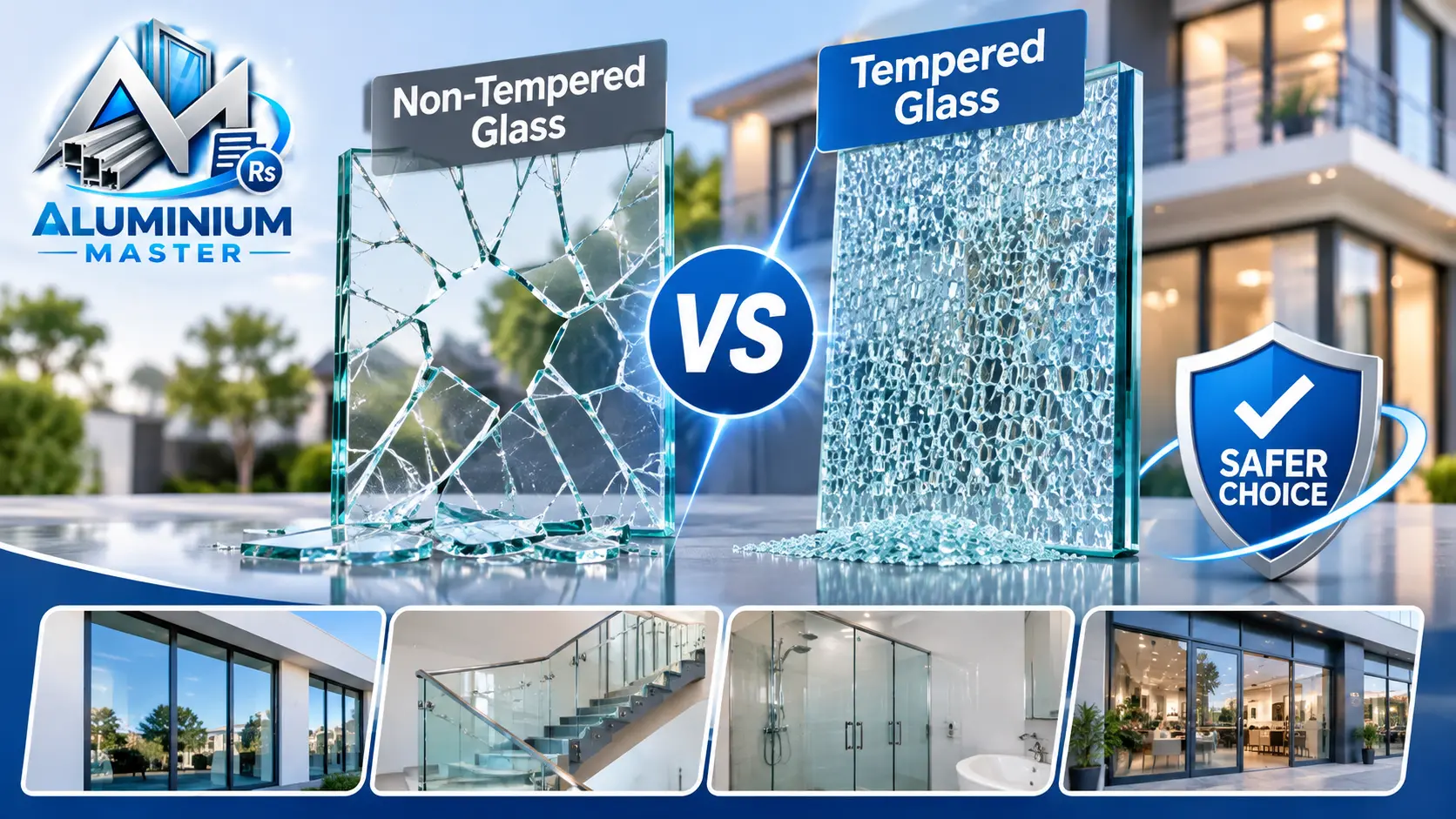
When you have aluminium or uPVC windows made for a new home or a renovation, you make a lot of decisions. Most people pay close attention to window size, aluminium thickness, colour and design. The type of glass usually gets much less thought.
Yet the glass has a big effect on how safe a window is and how long it lasts, not just on how it looks.
In the market, the discussion usually comes down to two types: non-tempered glass (ordinary glass) and tempered glass. They look almost identical. They differ in how they are made, how strong they are, how they break, what they cost and where they should be used.
This choice also matters beyond windows: in glass doors, shop fronts, shower cabins, stair railings, terraces, shopping malls and many other building jobs.
Let’s look at what tempered glass is, how it differs from ordinary glass, and which one makes sense for your home or commercial project.
1. What Is Non-Tempered Glass?
Non-tempered glass is ordinary glass, usually called float glass. It leaves the factory as large sheets and moves through distributors to wholesale markets, and from there to local glass shops.
The glass fabricator cuts the size you need from these sheets. They then grind or polish the edges as required and fit the glass in place.
It is used in almost every kind of building and commercial work, including:
- Aluminium and uPVC windows
- Wooden and steel doors
- Fixed windows in homes
- Bakery display counters
- Glass shelves in general stores and other shops
- Glass for furniture, tables and cabinets
- All kinds of glasswork in shops and business centres
Its biggest advantage is flexibility. It can be cut, resized and shaped on the spot, and leftover pieces can often be used for smaller jobs.
Its biggest weakness shows up when it breaks. Ordinary glass can break into large, sharp, knife-like pieces that can seriously injure anyone nearby.
2. What Is Tempered Glass and How Is It Made?
Tempered glass starts as ordinary glass. It then goes through an industrial process called tempering.
The glass is heated to a very high temperature, around 600°C or more. Then its surfaces are cooled rapidly with controlled jets of air. This leaves the outer surfaces in compression and the core in tension. That built-in stress is what makes tempered glass much stronger than ordinary glass.
In everyday language, many people call it “pakka sheesha” (hardened glass).
One rule is essential: all cutting and machining must be done before tempering.
That includes:
- edge polishing and bevelling;
- drilling holes;
- notches and cut-outs for hinges, handles and other hardware.
Only after all of that is done does the glass go to the tempering plant.
Once glass is tempered, it cannot be cut, drilled, ground or polished again. Any attempt to do so releases the stress inside it, and the whole panel shatters into small pieces.
This is why accurate measurements and a complete drawing are so important when you order tempered glass.
3. What Is the Biggest Difference Between Tempered and Non-Tempered Glass?
The main difference is strength, and the way each one breaks.
Ordinary glass usually breaks into large, sharp shards. If a window, door or panel is hit by accident, those pieces can cause deep cuts to anyone standing close by.
Tempered glass breaks differently. It crumbles into many small, blunt, roughly cube-shaped pieces.
This does not mean tempered glass can never cause an injury. But the risk of deep, dangerous cuts is far lower than with ordinary glass.
That is why tempered glass is preferred in public places, commercial buildings, and the parts of a home where broken glass could hurt someone.
4. Is Tempered Glass Really Stronger Than Ordinary Glass?
Yes. Tempering greatly increases the mechanical strength of glass.
At the same thickness, tempered glass is generally around four to five times stronger than ordinary glass. The exact figure depends on the quality of the glass, its thickness and how well it was processed.
Stronger does not mean unbreakable. Tempered glass can still be damaged by:
- excessive load;
- a hard knock on its edge, which is its weakest point;
- poor fitting, where the glass is pressed directly against metal;
- an accident.
In rare cases, tempered glass can also break on its own, with no visible impact. This is usually caused by tiny impurities in the glass, called nickel sulphide inclusions. Some plants offer a heat soak test, which reduces this risk. It is worth asking about for large panels at height or above walkways.
So along with the glass itself, correct fitting, suitable hardware and good workmanship matter just as much.
5. Where Is Tempered Glass Used?
Tempered glass can be used almost anywhere ordinary glass is used, as long as its thickness and specification suit the location and design.
Here are its most common uses in Pakistan.
Home Windows and Double Glazing
Double glazed windows are becoming more common in homes. They have two panes of glass with a sealed space between them. Many customers choose tempered glass for these units, especially where safety and strength matter most. If you are considering double glazing, read our guide on double glazed windows in Pakistan.
Stair Railings and Terraces
In modern homes, glass railings are replacing traditional iron grills. Glass on stairs, balconies and terraces is directly linked to people’s safety.
These places need good quality tempered glass, or laminated safety glass where the design requires it. Tempered glass on its own is not enough for every type of railing, so the glass must be chosen to match the design and the safety requirements.
Shop Fronts and Shopping Malls
Branded shops, malls and commercial plazas use very large glass panels. In these places, safety matters as much as appearance, so tempered glass is widely used.
Glass Doors
Offices, shops, banks and other businesses use tempered glass for their glass doors. These doors open and close many times a day, and ordinary glass is not suitable for that kind of use.
Shower Cabins
Shower cabins are becoming popular in home bathrooms. They are made of glass panels and are used every day, so safety glass is essential.
Fitting ordinary non-tempered glass in a shower cabin can be dangerous. Always use tempered glass of a suitable thickness with proper fitting.
6. Why Does Tempered Glass Cost More?
Tempered glass costs more than ordinary glass, mainly because of the extra manufacturing process.
Ordinary glass reaches the market as ready-made sheets, and the fabricator simply cuts it to size.
Tempered glass goes through more steps:
- It is first cut to the exact size.
- Edge polishing, drilling and all other machining are completed.
- It is sent to the tempering plant.
Each step adds cost: machinery, electricity, labour and transport.
There is also the question of location. Many smaller cities in Pakistan do not have a tempering plant, so local glass fabricators get tempered glass made in a bigger city.
For example, when a customer in a smaller city needs tempered glass, the local fabricator prepares the sizes and drawing and sends the order to a plant. After tempering, the glass is brought back and installed on site.
The final price depends on:
- thickness;
- size;
- cutting;
- the number of holes;
- the machining involved;
- transport and other costs.
This is why there is no single fixed price difference between tempered and non-tempered glass.
7. Should You Order Tempered Glass Directly From the Plant or Through a Fabricator?
This is an important point that customers should think about carefully.
With tempered glass, accurate measurement matters more than anything else. Once the glass has been tempered, its size cannot be changed by even a millimetre.
Imagine you order glass for a window or door, and later find a small mistake in the measurement. The glass is already tempered, so it cannot be trimmed to fit. You would have to order a new piece.
The better approach is to let an experienced glass fabricator take the measurements and prepare the drawing for your whole project. The same fabricator then orders the glass from the tempering plant on their own responsibility and completes the installation.
This way, measurement, drawing, manufacturing and fitting all stay under one responsible person. If something does not fit, it is clear who will solve it.
8. Which Glass Thickness Is Used for Windows and Other Work?
The right thickness depends on the size of the panel, the design, how it will be used and how the frame supports it.
In Pakistan, these thicknesses are commonly used:
| Glass Thickness | Common Use |
|---|---|
| 5mm | Standard windows and other light work |
| 6mm | Windows, shower cabins and various fixed panels |
| 8mm | Fixed windows, glass doors and larger panels |
| 10mm | Glass doors and specific commercial uses |
| 12mm | Heavy glass doors, railings and large panels |
These are general examples only. The actual thickness should be decided by the panel size, the support, wind load, the use and the relevant safety requirements.
Tempered glass is available in several thicknesses, but each plant’s machinery and capability are different. In general, 5mm and thicker glass is most commonly tempered.
9. How Can You Tell If Glass Is Tempered?
Tempered and ordinary glass look the same, but there are a few ways to check:
- Look for the stamp. Most tempering plants put a small permanent mark, usually the plant’s name or logo, in one corner of each tempered panel.
- Use polarised sunglasses. Look at the glass in daylight through polarised sunglasses. Tempered glass often shows faint dark lines or patches caused by the tempering process.
- Check the edges. Tempered glass edges are always finished smooth, because all edge work is done before tempering.
If you are unsure, simply ask your fabricator. They can confirm which plant the glass came from.
10. Should You Use Tempered or Ordinary Glass in Your Home Windows?
The decision depends on your needs, your budget and where the window is.
For standard aluminium or uPVC windows in a home, ordinary non-tempered glass is still widely used in the market.
If safety is a priority for you and you can afford the extra cost, tempered glass can be the better choice. It is used more and more in double glazed windows.
In parts of the home where broken glass is more likely to injure someone, safety glass should be the first choice. For example:
- glass stair railings;
- balconies and terraces;
- shower cabins;
- glass doors;
- large fixed panels close to the floor;
- glass panels within children’s reach.
One point is especially important. Where the glass must stay in place even after it breaks, tempered glass alone may not be enough. Railings and overhead glass are examples. These places may need laminated safety glass or tempered laminated glass, chosen to match the safety requirements of that location.
Final Word: What to Keep in Mind When Choosing Glass
When you have aluminium or uPVC windows made, don’t focus only on how many mm the glass is or what it costs. Also think about what the glass is for, and what safety that location needs.
Ordinary glass is still widely used because it is cheaper and easy to get. Tempered glass earns its place with extra strength and a much safer way of breaking.
For standard windows, you can choose between the two based on your needs and budget. For shower cabins, glass railings, doors and other sensitive places, do not compromise on safety glass.
Most importantly, before you order tempered glass, finalise the measurements, the complete drawing and all fitting details. Once it is made, nothing can be changed.
Aluminium Master’s View
Aluminium Master aims to share practical information about the aluminium, glass and window industry, so customers can make better, informed decisions for their homes and business projects.
For more information and guidance, visit: www.aluminiummaster.com