What Is Laminated Glass? Tempered vs Non-Tempered Laminated Glass, and Where It Is Used
 M. AshrafZSM-Multan, Ghani Glass Ltd
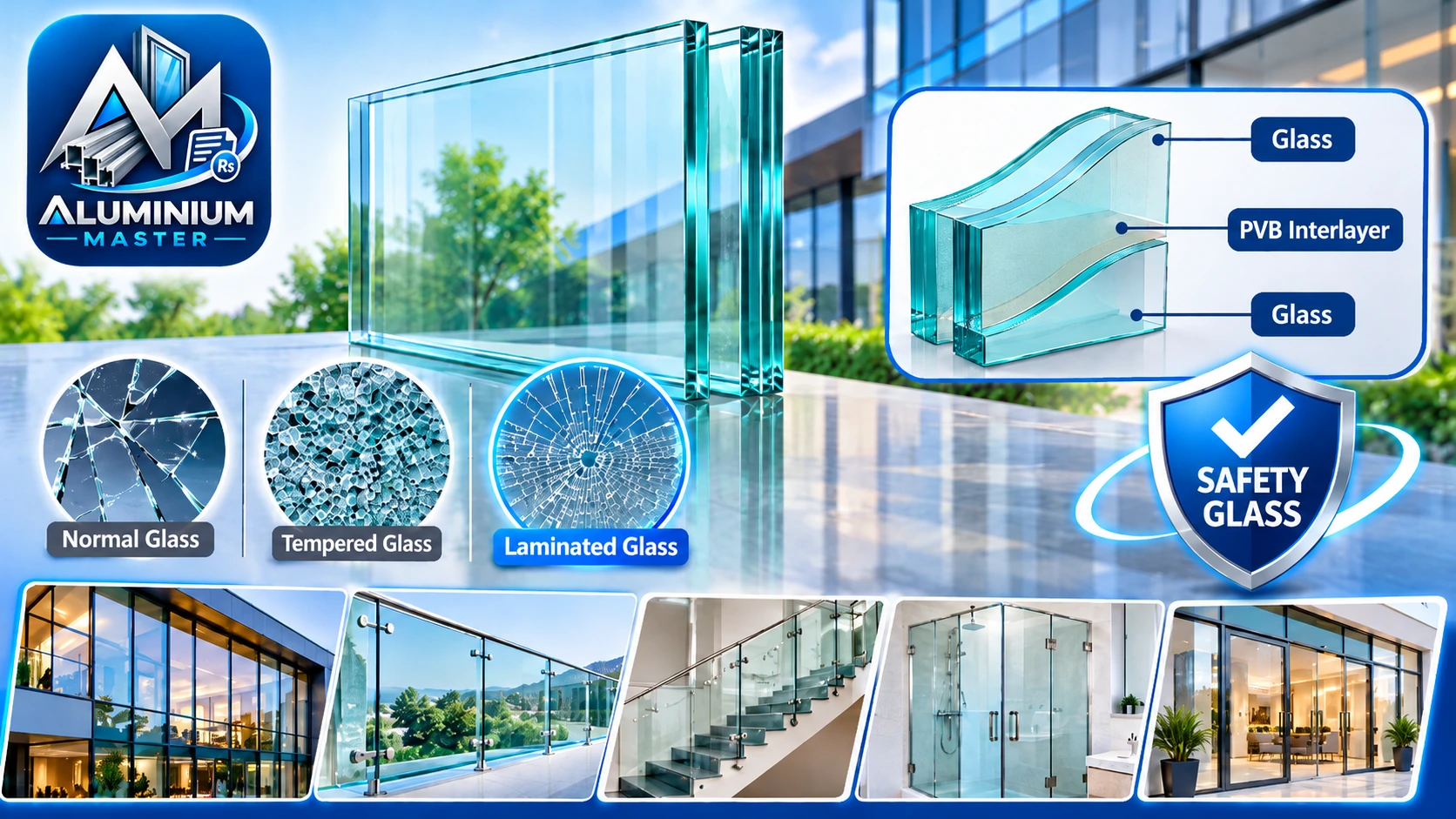
In modern buildings, glass is no longer just about looks or letting in light. Different types of glass are now chosen for safety, strength and comfort. Large buildings, shopping malls, commercial plazas, high-rise towers and modern homes increasingly need glass that protects people when an accident happens.
Ordinary glass can break into large, sharp pieces. Tempered glass breaks into much smaller fragments. There is a third type that, even when it breaks, does not fall out of its frame. This is laminated glass, and it is commonly known as safety glass.
According to professionals in the glass industry, including experts associated with Ghani Glass Limited, laminated glass has become a key choice for meeting safety requirements in modern construction.
In this article, we look at:
- what laminated glass is;
- how it is made;
- the difference between tempered and non-tempered laminated glass;
- where it makes sense in a home or commercial project.
1. What Is Laminated Glass?
Laminated glass is made by bonding two or more sheets of glass together with a special plastic layer, called an interlayer, between them.
The most common interlayer is PVB (Polyvinyl Butyral). This layer is what gives laminated glass its defining property.
For example, two 3mm sheets bonded with a PVB layer make what is called 3mm + 3mm laminated glass. The same can be done with 4mm + 4mm, 5mm + 5mm, 6mm + 6mm and thicker combinations.
The two sheets do not have to be the same thickness. Different thicknesses can be laminated together, for example:
- 3mm + 4mm
- 3mm + 6mm
- 5mm + 6mm
- 6mm + 8mm
- 8mm + 12mm
This lets the glass be built to suit the exact needs of a project.
The PVB layer adds to the final thickness. In 3mm + 3mm, the glass itself totals 6mm, so the finished panel is slightly thicker than 6mm. Standard PVB layers are usually 0.38mm, 0.76mm or 1.52mm thick. That is why you may hear the trade call a 3mm + 3mm panel “6.38mm” or “6.76mm” laminated glass.
2. How Is Laminated Glass Made?
Two glass sheets of the required thickness are selected first. A PVB sheet is placed between them, and the three layers are pressed together using specialised industrial machinery.
The process removes any air trapped between the glass and the PVB. Heat and pressure then bond the layers firmly together, usually finishing in a pressure oven called an autoclave.
Once finished, the two sheets act as a single panel.
The real value of laminated glass shows when it breaks. If it is struck in an accident, the broken pieces do not separate and fall the way ordinary glass does. The PVB layer holds them in place.
So even when cracked, the glass largely stays in its frame, and the risk of glass falling on people drops sharply. This is why it is called safety glass.
3. Why Is Laminated Glass Called Safety Glass?
What sets laminated glass apart is how it behaves after it breaks.
Imagine a large window in a home, a glass door, or the glass front of a commercial building. Something hits the glass and it breaks.
- Ordinary non-tempered glass can break into large, sharp pieces and fall, putting anyone nearby at serious risk.
- Tempered glass breaks into small, granular fragments. The risk of deep cuts is lower, but the broken pieces can still fall out of the frame.
- Laminated glass stays together, because the PVB interlayer holds the broken pieces in place.
The key benefit of laminated glass is that, after an impact, the glass is far less likely to scatter or fall.
Laminated glass is not unbreakable. A hard enough impact can shatter it badly. But its interlayer keeps the broken glass held together.
4. Is Laminated Glass Available in Both Tempered and Non-Tempered Form?
Yes. This is an important point that many customers miss.
Laminated glass is not made only from tempered glass. Ordinary non-tempered glass can be laminated too.
There are two common types.
Non-Tempered Laminated Glass
Two or more sheets of ordinary float glass are bonded with a PVB interlayer. It is suitable where the safety properties of laminated glass are needed, and the design and safety requirements allow it.
Tempered Laminated Glass
Both sheets are first cut to the exact size. Each one is tempered separately, and then they are laminated together with PVB.
The result combines the extra strength of tempered glass with the ability of laminated glass to hold broken pieces together.
That is why tempered laminated glass is often the better choice where safety requirements are higher. The final choice should always depend on the panel size, its use, how it is supported, and the relevant building safety standards.
5. Where Is Laminated Glass Used?
Laminated glass can be used almost anywhere glass is needed, provided its build-up, thickness and safety properties suit the application.
Here are its common uses in Pakistan.
Aluminium and uPVC Windows in Homes
Modern homes are using larger and larger windows, including floor-to-ceiling glass. In windows like these, safety glass matters more. With laminated glass, if the glass breaks, the pieces stay in place.
Balcony and Terrace Railings
Glass railings are becoming common in modern homes and commercial buildings. The glass here is directly linked to people’s safety, so laminated safety glass is an important choice, especially where the glass must stay in place even after it breaks.
Glass Stair Railings
A glass stair railing has to look good and keep people safe. Here, strength alone is not enough: the glass must also stay in position after it breaks. That is why tempered laminated glass is used, to a suitable design.
For frameless railings, some projects use a stiffer interlayer instead of standard PVB, commonly called SGP or ionoplast. It keeps broken glass more rigid and upright. Your glass professional can advise whether your design needs it.
Shopping Mall and Commercial Building Fronts
Large malls, branded shops and commercial plazas use big glass panels. In these buildings, laminated glass is an important option for safety, and for keeping the glass under control if an accident happens.
Glass Doors and Fixed Windows
Laminated glass can also be used for glass doors and large fixed windows in offices, shops, hotels and other businesses.
Bakery and Shop Display Counters
It is also useful for display counters and showcases in bakeries, general stores, jewellery shops and other businesses, especially where broken glass could damage goods or hurt people.
6. Does Laminated Glass Also Reduce Noise and Heat?
The main purpose of laminated glass is safety, but it has other benefits too.
Noise
The PVB layer between the two sheets dampens sound, so laminated glass reduces noise better than ordinary glass of similar thickness at many frequencies. A special acoustic PVB, made for sound control, improves this further.
UV Protection
Standard PVB blocks almost all of the sun’s ultraviolet (UV) rays. This helps protect furniture, curtains, flooring and other items indoors from fading.
Heat and Weather
For heat and weather, laminated glass should be chosen together with the glass thickness, any coating, the interlayer and the complete window system.
It would be wrong to assume that laminated glass on its own gives the thermal performance of double glazing. Good thermal insulation also depends on double glazing, a proper spacer and good sealing.
7. How Is Laminated Glass Used in Double Glazing?
Laminated glass can be combined with double glazing.
Say you are having a double glazed window made and want safety glass on both sides. One pane can be 3mm + 3mm laminated glass, with PVB in between. Then, with a suitable spacer and sealing, the second pane can also be 3mm + 3mm laminated.
The unit then looks like this:
- First pane: 3mm glass + PVB + 3mm glass
- Middle: spacer of the required width
- Second pane: 3mm glass + PVB + 3mm glass
Depending on the project, you can also use laminated glass on one side and ordinary or tempered glass on the other.
In double glazing, the number of glass sheets is not the only thing that matters. Several things all affect performance:
- the thickness of each pane;
- the gap between the panes;
- the spacer;
- the sealing;
- how the glass is built up.
To understand double glazing in more detail, read our guide on double glazed windows in Pakistan.
8. How Is Laminated Glass Cut?
Laminated glass is cut differently from ordinary glass.
Non-Tempered Laminated Glass
To get the required size, the glass on each side is scored and broken separately. The PVB layer in the middle is then cut through with a special blade. The PVB is often warmed first, so it separates cleanly.
This needs experience and the right tools, because both sheets and the interlayer have to be handled carefully.
Tempered Laminated Glass
Here the process is different. All cutting, drilling, edge polishing and other machining is done on each sheet before tempering. The sheets are then tempered and laminated.
Once glass is tempered, it cannot be cut or drilled again. That is why accurate measurements and a complete drawing are essential before placing the order. Our article on tempered vs non-tempered glass explains this in more detail.
A note on fitting: the edges of laminated glass should be protected from standing water and constant moisture. Long-term exposure can cause the interlayer to separate at the edges, which is called delamination. A good fabricator makes sure the frame drains properly and uses compatible sealants.
9. Why Does Laminated Glass Cost More?
Laminated glass costs more than ordinary glass because it needs extra material, special machinery and several industrial steps.
Ordinary glass only needs cutting and basic finishing. Laminated glass uses two or more sheets of glass plus a PVB interlayer, and it has to be processed in a dedicated plant.
Its price depends on several factors:
- the thickness of the glass used;
- the quality and brand of the glass;
- the type and thickness of the PVB interlayer;
- the size and number of panels;
- whether it is non-tempered or tempered;
- cutting, drilling and other machining;
- transport and installation costs.
If tempering is involved, the price goes up further. If laminated glass is used in double glazing, the cost of the extra glass, spacer, sealing and assembly is added on top.
So there is no single fixed price for laminated glass. The cost changes from project to project.
10. Should You Order Laminated Glass From the Factory or Through a Fabricator?
Unlike ordinary glass, laminated glass is not available ready-made at every local glass shop. It needs specialised machinery and industrial facilities.
In Pakistan, this kind of glass is usually made in dedicated glass processing plants. Ghani Glass Limited, play an important role in supplying the base glass, while lamination needs a suitable processing facility.
The usual process works like this. The customer shares the project requirements with an experienced glass fabricator. The fabricator then gets the laminated glass made at the factory to the required size, thickness and design.
This glass is often made to order for each project, because it is not always available off the shelf, especially in smaller cities.
The best approach is to have the measurements and drawing for the whole project prepared first, and then place the order. This avoids wasted glass and extra cost.
11. Which Laminated Glass Thickness Is Right?
Laminated glass comes in many thicknesses. The two glass sheets and the PVB interlayer together make up the total thickness.
For example:
| Glass Build-Up | General Use |
|---|---|
| 3mm + 3mm | Specific light-duty uses |
| 4mm + 4mm | Windows and other panels |
| 5mm + 5mm | Various fixed panels |
| 6mm + 6mm | Large and specific safety panels |
| 8mm + 8mm | Specific commercial uses |
| 12mm + 12mm | Heavy-duty designs and specific uses |
These are general examples only, not a final recommendation for any particular location.
For railings, balconies, terraces, large fronts and tall buildings, the thickness has to be considered together with:
- the glass build-up;
- the support system;
- wind load;
- the fixing method;
- the relevant safety standards.
12. Which Laminated Glass Is Right for Your Home or Commercial Project?
That depends on where the glass is going and what kind of safety it needs.
For standard home windows, non-tempered glass or other suitable options can be chosen based on your needs and budget.
But if the glass is going somewhere it could fall after breaking and hurt someone, laminated safety glass is the more suitable choice. For example:
- glass stair railings;
- balconies and terraces;
- glass fronts on tall buildings;
- fixed windows in large commercial plazas;
- glass doors;
- large glass panels;
- safety glass in public places.
In these places, tempered laminated glass, chosen to suit the design and safety needs, is often the better option.
For railings and glass at height in particular, don’t rely on tempered glass alone. Choose a safety glass that stays in place even after it breaks.
For these applications, it is important to have the design approved by a qualified engineer or an experienced glass professional.
Final Word: What to Keep in Mind When Installing Laminated Glass
Laminated glass is an important step forward for safety in modern construction. Its biggest strength is that, even when the glass breaks in an accident, the PVB interlayer helps hold the pieces together. That is what sets it apart from both ordinary glass and tempered glass alone.
That said, the thickest or most expensive glass is not always the best choice. What matters is which glass is right for your building, window or panel.
Before you start, share your project details with an experienced glass fabricator or engineer. That applies whether you are having standard home windows made, building a commercial front, or installing glass railings on stairs and terraces.
Make sure every stage is properly decided:
- glass thickness;
- tempering;
- the PVB interlayer;
- lamination;
- fitting.
Remember: the right glass does more than make a building look good. It also plays a key role in its safety and long-term durability.