Aluminium Door Price in Pakistan: Types, Designs, Gauge and What Decides the Cost
 Nasir MahmoodFounder & Developer, Aluminium Master
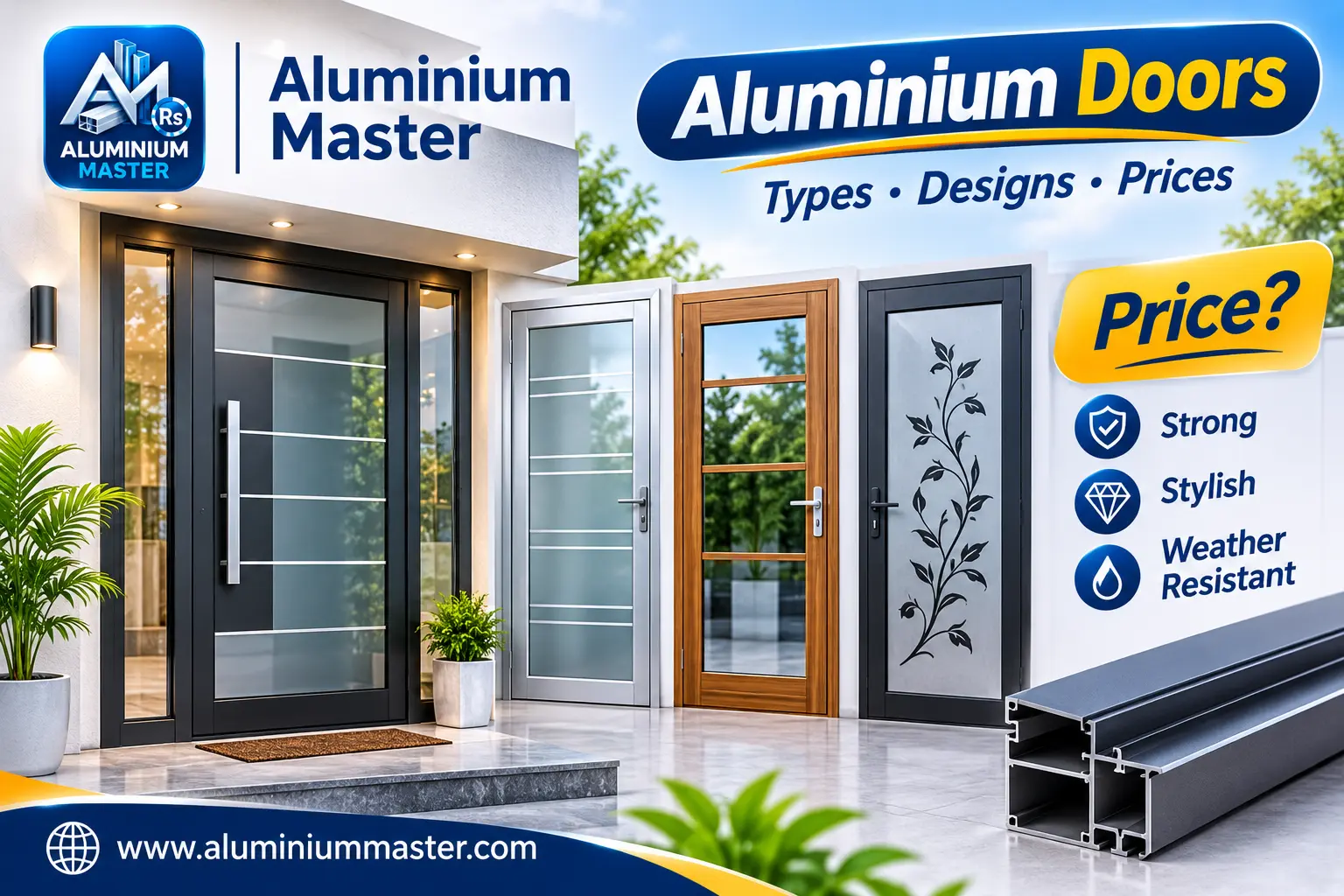
Like aluminium windows, aluminium doors are now a regular part of modern homes, offices and commercial buildings. They are especially popular for washrooms, bathrooms and store rooms: places where a door needs to be strong, look good, and stand up to moisture and weather.
Aluminium doors have also moved well beyond plain, basic designs. Today they come in many styles, colours, glass options and section types, so you can choose a door that suits your needs, your taste and your budget.
But when it comes to price, most people are not sure what actually decides it. There is no single fixed price for an aluminium door. The cost depends on:
- the material;
- the gauge;
- the section;
- the size;
- the colour;
- the glass;
- the design.
Let’s look at how aluminium doors are made and how their price is worked out.
1. Aluminium Sections Used in Doors
Aluminium windows are made in sections of different widths and thicknesses, and so are doors.
The most common door sections in the market are 2 inch, 3 inch and 4 inch. They are also available with collar and without collar.
Which of the two is used depends on the door’s design and purpose, and the two can differ in price.
The thickness of the aluminium, which the market calls gauge, also has a direct effect on the price. Thicker aluminium is generally stronger, and it costs more.
To understand thickness in more detail, read our guide on aluminium window thickness. Most of what it covers applies to doors as well.
2. Colours and Finishes for Aluminium Doors
One advantage of aluminium doors is the range of colours and finishes available. Almost every colour used for aluminium windows can be used for doors too, including:
- champagne;
- wood colour series;
- matt black;
- powder coated colours;
- other classic and modern shades.
You can choose a colour that matches your interiors, furniture and other doors. Some people prefer wood colours for a warm, wooden look. Modern homes often go for matt black or other powder coated finishes.
3. Aluminium Door Designs and Glass Options
Alongside simple designs, modern and decorative aluminium doors are becoming popular. They use dividers of different sizes, different glass patterns and decorative details.
The glass is a big part of the design. The common options are:
- Plain glass: clear and simple, mostly used in offices and commercial spaces.
- Frosted glass: lets light through but hides what is inside. Well suited to washrooms and bathrooms.
- Paper or film glass: plain glass with a film or paper applied, which gives privacy, like a curtain.
- Designer glass: glass with patterns and designs, for a more decorative look.
- Mirror designs: some customers have floral motifs or decorative etching done on glass or mirror and fitted into the door.
Each of these choices affects how the door looks, and what it costs.
4. What Is a Kick Plate and Why Is It Used?
The kick plate is a key part of many aluminium doors. It is an aluminium plate fitted at the bottom of the door.
In many designs, the door is split into two parts:
- the lower part has a kick plate;
- a divider runs across the middle;
- the upper part has glass.
So the bottom of the door is solid aluminium and the top is glass.
The kick plate is not just for looks. The bottom of a door takes the most knocks, from feet, buckets, mops and cleaning, and in washrooms it also faces regular splashes of water. A solid aluminium plate there protects the door and keeps glass away from the area most likely to be hit.
Some customers prefer aluminium plates in place of glass across the whole door. Then the entire door is made of aluminium plates and sections, with no glass at all. Because of the extra material and design work, these doors can cost more overall.
5. Door Size and Aluminium Thickness
Aluminium doors are usually made to order to fit the customer’s opening, not bought in a ready-made size. So the size and location of the door come first.
For larger doors, a heavier gauge is better for strength and long life. For smaller doors, 1.2mm or 1.6mm aluminium can be used, depending on the need and the design.
Gauge is not decided by size alone. A good fabricator also considers:
- the height and width of the door;
- how often it will be used;
- the structure of the section;
- the weight of the glass or plate fitted in it.
Choosing the right material is essential for a door that stays strong and works well for years.
6. Where Are Aluminium Doors Used?
Aluminium doors are used in many parts of a home, and in offices and commercial buildings. In homes, their most common use is for washrooms and bathrooms.
The reason is simple: aluminium does not rust like ordinary iron. In places with constant water and moisture, that makes it a practical choice.
Even when a washroom door is on the outside of the house, facing direct sun, rain and harsh weather, good quality aluminium holds its shape and keeps working well. That is why aluminium is also preferred for doors used outdoors.
A practical tip for washroom doors: ask for stainless steel hinges, screws and fittings. The aluminium will not rust, but cheap iron hardware can, and rusted hinges are usually the first thing to fail on a washroom door. Many washroom doors also have a small louvre (ventilation grill) built into the design, which lets moisture and odours escape.
7. Aluminium vs PVC Doors: What Is the Difference?
PVC doors have become very common in the local market, mostly because they are cheaper.
They are widely used in middle and limited-budget homes, especially for bathrooms and attached washrooms.
But there are differences beyond price.
PVC doors are cheaper, but how long they last depends on the quality of the material. In places with direct sun and harsh weather, low-quality PVC doors can fade, warp or weaken over time.
Good quality aluminium doors handle moisture, sun and changing weather better. With proper material and good fitting, they can last for many years.
So an aluminium door may cost more at first, but many customers consider it the better choice for strength, looks and long-term use. If you are comparing materials for windows as well, read our article on aluminium vs uPVC windows in Pakistan.
8. What Decides the Price of an Aluminium Door?
This is the question almost every customer has: how much will an aluminium door cost?
A correct answer needs the full details of the door, because the price does not come from a single formula or fixed rate. These are the main factors:
- Door size: the height and width decide how much aluminium is used.
- Aluminium thickness (gauge): 1.2mm, 1.6mm and thicker material are priced differently.
- Section width: a 2 inch, 3 inch or 4 inch section changes the cost.
- Collar or without collar: the two types can differ in price and use.
- Colour: champagne, wood colour, matt black and powder coated finishes can change the price.
- Kick plate or full aluminium panel: using plate instead of glass changes the material and the cost.
- Glass type: plain, frosted, designer and film glass are each priced differently.
- Dividers and design: extra dividers, decorative work and complex designs add to the making cost.
- Hardware and fitting: the quality of the hinges, lock, handle and other accessories affects the total price.
Only after considering all of these can an accurate price be worked out for a door.
For a general idea of how aluminium work is priced, see our guide on aluminium window price in Pakistan.
9. How to Get the Best Price for an Aluminium Door
First, be clear about what you need. Measure the door opening and decide:
- the design;
- the colour;
- the aluminium thickness;
- whether you want glass, a kick plate or a full aluminium panel.
Then speak to your local aluminium fabricator. A good, experienced fabricator can show you samples of different sections, colours, glass and designs, and help you choose what suits your home.
Get quotations from more than one fabricator. When you do, keep the specification exactly the same for each one.
For example, say one fabricator quotes for a door with 1.6mm gauge, a 3 inch collar section, champagne colour and frosted glass. Ask the next fabricator to quote for exactly the same specification.
If one quotation uses heavier gauge and the other lighter, or one uses good quality glass and the other ordinary glass, comparing the two prices is not a fair comparison.
A clear, written quotation that lists the section, gauge, colour, glass and hardware makes this easy. It helps you compare like with like, and it shows the care a professional fabricator puts into their work.
Don’t decide on the lowest price alone. Also look at the quality of the material, the section thickness, the type of glass, the hardware and the finishing of the work.
Final Word
Aluminium doors are a popular choice for homes and commercial buildings because they:
- look good and have a refined finish;
- are strong;
- handle the weather well.
They may cost more at first than ordinary PVC doors, but with good material and proper workmanship they last for many years.
There is no single fixed rate for an aluminium door. Every door is priced on its own:
- size;
- gauge;
- section;
- colour;
- glass;
- kick plate;
- design;
- hardware.
So if you are planning an aluminium door:
- choose the material and design that fit your needs;
- get quotations from different fabricators for the same specification;
- make your decision with quality in mind.
That way, you get a door that fits your budget and meets your needs for both looks and durability.
Aluminium Master’s View
Aluminium Master aims to share practical information about the aluminium, glass and window industry, so customers can understand their needs better and make informed decisions.
For more information and guidance on aluminium windows and doors, visit: www.aluminiummaster.com