Which Aluminium Thickness Is Best for Windows: 1.2mm, 1.6mm or 2.0mm?
 Nasir MahmoodFounder & Developer, Aluminium Master
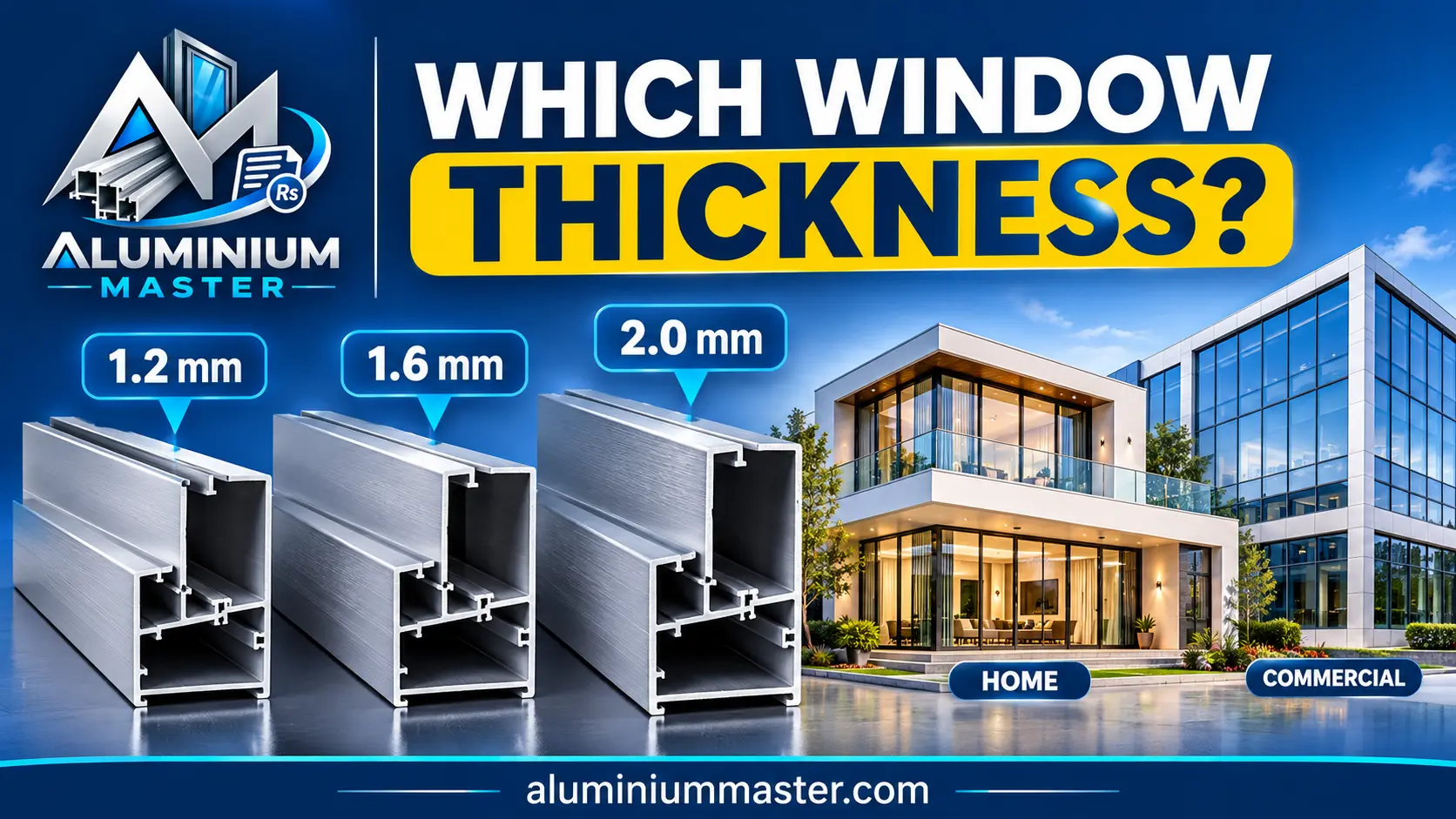
When you plan aluminium windows for a home or a commercial project, one question comes up almost every time: which thickness should you choose? Is 1.2mm enough, or should you go for 1.6mm or 2.0mm?
Manufacturers in Pakistan supply aluminium sections in a range of thicknesses. The most common are 1.2mm, 1.6mm and 2.0mm, but thinner sections such as 1.1mm, 1.0mm, 0.9mm and 0.85mm are also widely sold.
The real question is not which aluminium is the thickest. It is which aluminium is right for your project. Let’s go through it step by step.
1. Start With Your Budget and Your Needs
In general, a thicker section can give a stronger window, provided the alloy, the section design and the manufacturing are also of good quality. With the right design, a heavier gauge can improve strength and durability, and the finished window often feels more solid.
That does not mean every house needs 1.6mm or 2.0mm aluminium.
Before you decide, look at your budget, the size of your windows and how they will be used. Choosing a heavy gauge where it isn’t needed adds to the cost of the project without giving you any real benefit.
A note on the word “gauge”: In the market, “gauge” is used loosely and can mean different things to different people. Always talk about thickness in millimetres, and have the millimetre figure written in your quotation.
2. Why 1.2mm Is a Sound Choice for Most Homes
If you are building a 5, 7 or 10 marla house with windows of ordinary size, a good quality 1.2mm section is usually a sensible and practical choice. Typical examples:
- 5 ft × 5 ft window
- 5 ft × 6 ft window
- 6 ft × 7 ft window
For sizes like these, a standard 1.2mm section generally performs well, as long as the window design, section profile, glass and fittings suit it.
In my view, there is no need to use thicker aluminium in an ordinary home just because it is heavier or more expensive. If you are getting a genuine 1.2mm section from a reliable company and your windows are of normal size, that is a good choice.
Take more care with anything below 1.2mm, such as 1.1mm, 1.0mm, 0.9mm or 0.85mm. Don’t choose these sections only because they are cheaper. Ask your fabricator about their actual thickness, their strength and whether they suit the size of window you need.
3. Why Commercial and Public Buildings Need a Heavier Gauge
Not every project has the same requirements. A family home and a building used by hundreds of people every day are very different. Examples of high-use buildings include:
- Offices and factories
- Commercial plazas and markets
- Private schools and colleges
- Universities and hospitals
- Mosques and other public places
In these buildings, doors and windows are opened and closed far more often than in a home. Constant use and rough handling put the frames under more stress, so strength needs special attention.
For such projects, heavier sections such as 1.6mm or 2.0mm are often the better choice. Government and large institutional projects also generally prefer stronger, more durable material. Even so, the final thickness should follow the technical specifications of the project and the design of each window.
4. Which Thickness for Large Windows?
Large windows are becoming popular in modern homes and housing societies, and some houses now have windows of 10 ft × 10 ft or more. The rules for ordinary home windows don’t simply carry over to these.
As a window gets bigger, the weight and pressure on the frame, the sashes and the glass increase. Height matters too: windows on upper floors and in high-rise buildings face stronger wind pressure than those at ground level.
For large windows, it is worth considering heavier sections such as 1.6mm or 2.0mm. But thickness alone is not enough. You should also consider:
- The depth and profile of the section
- The height and width of the window
- The weight of the glass
- The support system of the frame, such as mullions and reinforcement
One point is often missed: the depth and shape of a section usually affect its stiffness more than wall thickness alone. A deeper, well-designed profile in 1.2mm or 1.4mm can bend less than a shallow profile in 1.6mm. This is why the right section for a large window should be chosen with the help of an experienced aluminium technician or designer, not by thickness alone.
5. Which Aluminium for Double-Glazed Windows?
Double glazing uses two panes of glass, so the sash carries much more weight than a single-glazed one. The sections, sashes, rollers and fittings must all be able to carry that weight.
A simple calculation shows the difference. Glass weighs about 2.5 kg per square metre for every millimetre of thickness:
- Single 5mm glass: about 12.5 kg per square metre
- Double glazing with two 5mm panes: about 25 kg per square metre
A sliding sash of 3 ft × 5 ft (15 sq ft, about 1.4 square metres) therefore carries about 17 kg of glass when single glazed, and about 35 kg when double glazed. That is double the load on the same rollers, every time the window is opened.
This is why 1.6mm or 2.0mm sections designed for double glazing are often a better choice than 1.2mm. Rollers matter as well: they should be rated for the actual weight of the sash, because ordinary rollers wear out quickly under heavy glass.
Not every double-glazed window needs 2.0mm aluminium, though. The right thickness depends on the system you use, the thickness of the glass, the size of the window and the load the section is designed to carry.
6. Use a Heavy Gauge for Stair and Terrace Railings
Aluminium is no longer limited to doors and windows. It is now widely used for stair railings and for safety railings on terraces and balconies.
Because safety is critical in these places, choose heavy-gauge sections with a strong structure. With railings, don’t judge by thickness alone. The fixing into the floor or wall, the joints, the supports and the overall design must all meet safety needs. If the railing uses glass panels, use tempered or laminated safety glass, never ordinary glass.
7. Thicker Aluminium Is Not Automatically Better Quality
This is an important point that many customers overlook.
It is often assumed that a 1.6mm or 2.0mm section must be the best. In reality, thickness alone does not decide the quality of a section. Several factors matter:
- The alloy and the quality of the raw material
- The design and profile of the section
- The actual thickness, and whether it is the same all around the section
- Powder coating, anodising or other surface finish
- The quality of the rollers, locks and other fittings
- How the window is fabricated and installed
If you live in a coastal city such as Karachi or Gwadar, the quality of the coating matters even more, because salty, humid air attacks a poor finish quickly.
Thickness alone doesn’t tell the whole story, so it helps to know exactly which section is going into your windows.
Ask Your Fabricator to Show You the Section
A good fabricator is glad to walk you through the material before work begins. It makes your choice easier and builds confidence on both sides. You can ask your fabricator:
- To show you a cut piece: Your fabricator can measure the wall of a section with a vernier or digital caliper and show you the reading at a few points.
- To show you the catalogue: Aluminium companies publish catalogues that list each section’s thickness and its weight per foot or per metre. Your fabricator can point out the exact section that will go into your windows.
- To write the details in the quotation: When the company name, the section and its thickness are written in the quotation, you and your fabricator both have a clear record of what was agreed.
Conclusion: Which Thickness Is Right for Your Home?
Put simply, the decision is not difficult.
For an ordinary home with windows of normal size, a good quality 1.2mm section is a suitable choice. For large windows, busy commercial buildings and systems with heavy glass, consider 1.6mm or 2.0mm.
No single thickness is right for every project. The decision should be based on the size of the window, its design, how it will be used, the weight of the glass and your budget.
A good decision is not buying the most expensive aluminium. It is choosing the right material for your needs.
Aluminium Master’s View
At Aluminium Master, our aim is to give customers clear and practical information about aluminium windows, glass and related materials, so they can make better decisions for their projects.
If you are planning aluminium windows for your home or a commercial project, look beyond the price. Understand the thickness of the material, the quality of the section and the design of the window. To learn how window prices are worked out, read our guide to aluminium window prices in Pakistan.
For more information and guidance, visit www.aluminiummaster.com.