Aluminium vs uPVC Windows in Pakistan: Which Is Better for Your Home?
 Nasir MahmoodFounder & Developer, Aluminium Master
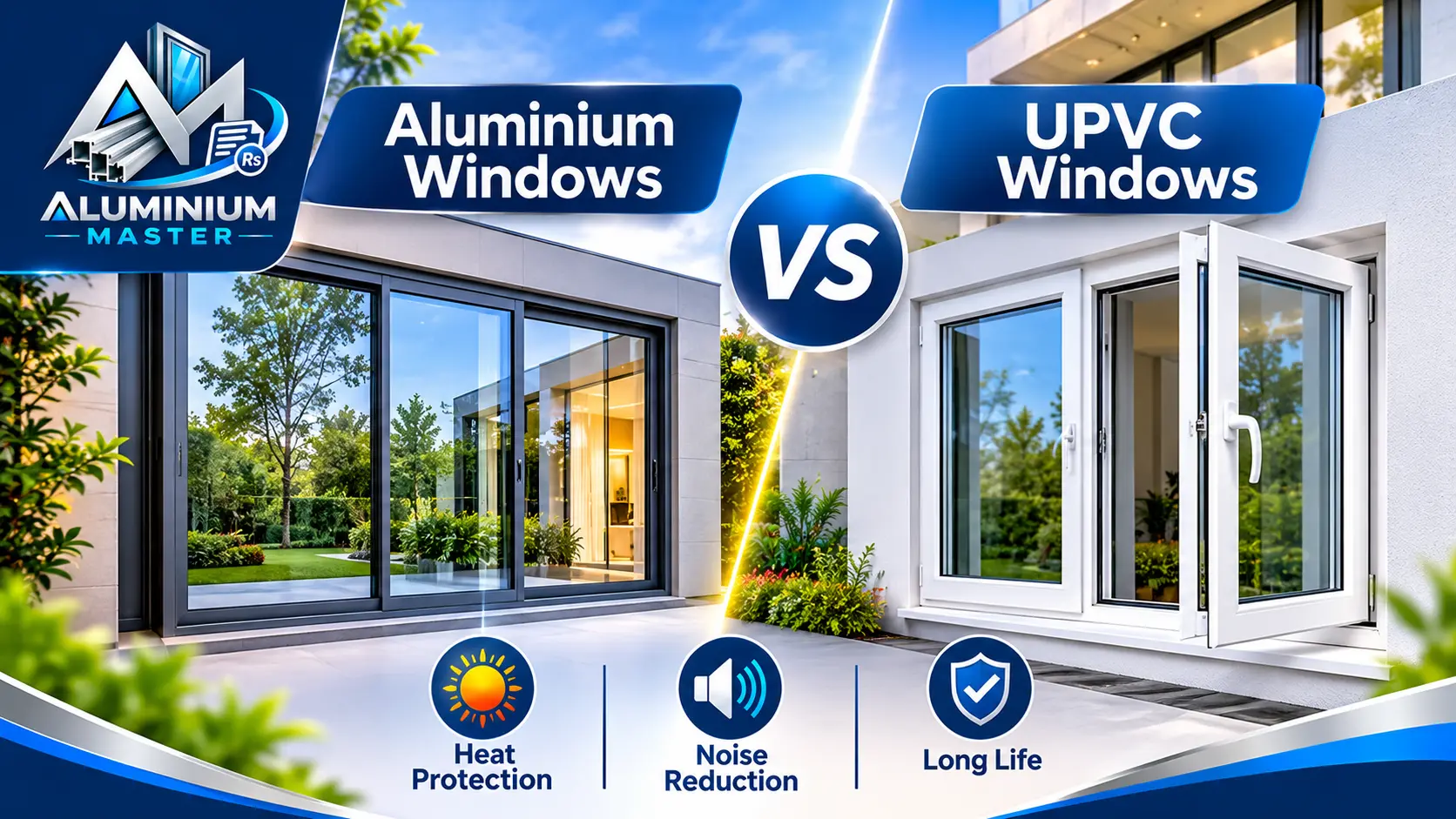
Whether you are building a new home or a commercial project, the windows you choose matter. Construction is changing, and buyers now expect more from their windows than good looks. They want windows that are strong, protect against extreme weather, keep out noise and perform well for many years.
In Pakistan, aluminium has long been the most common choice for windows. It is strong, comes in many designs, is reasonably priced, and skilled fabricators can be found in almost every city. In recent years, though, uPVC windows have been making their place, especially in modern homes and housing societies in the big cities.
Both materials have their strengths and their limits, so it would be wrong to call one better in every way. The right choice depends on what you need, your budget and the kind of home or project you are building.
Let’s compare aluminium and uPVC windows point by point.
1. What Is the Basic Difference?
Aluminium and uPVC are two completely different kinds of material.
Aluminium Windows
Aluminium is a strong, relatively light metal that is extruded into profiles and sections. These sections are joined to make windows. Powder coating or anodising gives the surface its finish and protects it from the weather.
One of aluminium’s strengths is its range. It comes in different thicknesses, sizes and designs, and in a wide choice of colours. Different series come in many standard colours, powder coating lets you choose almost any colour you like, and anodising gives its own range of attractive finishes.
uPVC Windows
uPVC stands for Unplasticized Polyvinyl Chloride. It is a specific type of plastic made for window and door profiles.
uPVC is not ordinary plastic. It is formulated to make strong, durable profiles. Good quality uPVC profiles also have steel reinforcement inside them, which helps the profile keep its shape and adds strength.
Not every uPVC profile has the same steel reinforcement, though. It depends on the design of the profile and the quality of manufacturing.
uPVC windows are most often white. Other colours and wood-grain looks are usually achieved with a laminated foil on the profile.
2. How the Windows Are Made
The two materials are also fabricated in different ways.
For aluminium windows, the sections are cut to size and joined with screws, corner joints and other fittings. Then the glass, rollers, locks and handles are fitted.
A big advantage of this method is that if one part of the window fails, a fabricator can often open that part and repair or replace it. A broken roller or handle, or a loose screw, can be dealt with on the spot, and in some cases even a single section of the window can be replaced.
uPVC windows are made with special machines. After the profiles are cut, their ends are heated to a set temperature and fused together. This process is called heat fusion, or welding. It creates a strong joint and turns the profiles into a single, complete frame.
Repairs work differently too. The handles, locks, rollers and other hardware of a uPVC window can be replaced, but if the welded frame itself is damaged, repair is harder and more expensive. In some cases the frame has to be made again.
So one practical strength of aluminium windows is that their parts are usually easier to repair and replace.
3. Which Is Better Against Heat and Cold?
This is a key question in Pakistan, where summers are severe in most of the country.
Here uPVC has a clear advantage. It conducts far less heat than aluminium, so even an ordinary uPVC profile gives good thermal insulation on its own.
Aluminium is a metal and passes heat much more easily, so an ordinary aluminium window lets more of the outside heat into the room.
Modern aluminium windows can close much of this gap with thermal break technology, an insulating barrier built into the frame that greatly reduces heat transfer. Aluminium windows are also available with double glazing, where two panes of glass with a sealed gap between them improve insulation further.
uPVC windows are available in both single and double glazing as well.
If protection from heat and cold is your main goal, good quality uPVC windows are a strong choice. Modern thermal break aluminium with good double glazing can also perform very well. To learn more, read our guide to double glazed windows.
4. Does Pakistan’s Extreme Heat Affect uPVC Windows?
This deserves careful attention.
In many parts of Pakistan, summer temperatures climb very high, and constant sunlight and ultraviolet (UV) rays affect all building materials.
With uPVC, the quality of the profile is critical. Low-quality profiles can change colour, turn yellow, warp or weaken over time.
That does not mean every uPVC window yellows or fails in the heat. Good companies add UV stabilisers and other protective ingredients to their profiles, which help them stand up to sunlight and weather.
So when you buy uPVC windows, don’t look at the price alone. Ask about the profile quality, its UV resistance, the steel reinforcement and the company’s warranty.
5. Which Is Better in Humid and Coastal Areas?
Some parts of Pakistan stay humid for much of the year. In a coastal city like Karachi, sea air and moisture are a real challenge for building materials.
Aluminium does not rust the way iron does, but in salty, humid air, aluminium with a poor or ordinary coating can develop corrosion over time, which shows up as white, powdery spots and pitting on the surface. Good alloy and proper powder coating or anodising protect aluminium from this to a large extent.
uPVC has no metal surface to corrode, so it can be a good choice in humid climates. This is one reason uPVC windows are becoming more popular in Karachi and other large cities.
Even in coastal areas, though, don’t overlook the quality of the uPVC profile, its reinforcement, the hardware and the sealing.
6. Easy Repairs and Skilled Fabricators: A Major Strength of Aluminium
One big reason for aluminium’s popularity is its wide market network.
Almost every city and town in Pakistan has fabricators who work with aluminium and glass. If a roller fails, a handle breaks or some other part gives trouble years later, you can usually find a fabricator in your own city or the nearest market.
uPVC is different. The special machines, trained fabricators and materials it needs are not available in every city.
Large cities have uPVC workshops and manufacturers, but in smaller cities local dealers often take the window sizes, have the windows made in a factory in a big city, and then install them at the customer’s home.
In that case, future repairs or replacement parts may depend on that company or on fabricators in a big city. This is a practical issue to keep in mind when choosing your windows.
7. Which Costs Less?
Price plays a big part in the choice.
In general, ordinary aluminium windows cost less than uPVC windows. But both materials come in many levels of quality and price.
A low-priced uPVC window may use a profile, steel reinforcement or hardware that is not up to standard. In the same way, a good quality aluminium window costs more because it uses better sections, better glass and better hardware.
Sometimes the price of a uPVC window can buy you an aluminium window of noticeably better quality.
So rather than comparing prices by the name of the material, compare quotations for the same requirements and the same standard of quality.
8. Aluminium or uPVC for Sliding Windows?
Sliding windows are among the most common windows in Pakistani homes. They take up little space, are easy to use and can be made in many sizes.
For sliding windows, aluminium is a popular and practical choice. Because the metal is relatively light, aluminium sliding sashes move easily on the right rollers. With good rollers and correct fitting, the window opens and closes with very little effort.
uPVC sliding sashes are usually heavier than aluminium ones, especially with double glazing, so they need suitable rollers and strong hardware.
It isn’t true, though, that uPVC sliding windows are always stiff to open and close. With good hardware and correct installation, they also slide smoothly.
If most of the windows in your home will be sliding windows, aluminium is a good and relatively economical choice.
9. uPVC Is a Good Choice for Openable Windows
If you prefer openable windows to sliding ones, uPVC is well worth considering.
uPVC comes in many openable styles, including casement and tilt-and-turn windows. These look modern and elegant, and good sealing with multi-point locking helps keep out air and water.
uPVC openable windows can also be made with double glazing, and decorative grills or Georgian bars can be added between the panes to create attractive designs.
If you are building a modern home and your budget allows, uPVC openable windows can be a very good option.
10. Why uPVC Is Growing in the Big Cities
As modern homes and large housing societies spread across Pakistan, window choices are changing too.
In the big cities, where modern bungalows, large houses and big residential projects are being built, uPVC windows are being used more and more. Better thermal insulation is one reason; their modern design and clean finish is another.
Buyers who can invest more in their homes often choose newer materials and features.
Aluminium remains just as important, however. Its wide availability, range of colours and designs, easy repairs and reasonable price keep it among the most widely used window materials in Pakistan today.
Conclusion: Aluminium or uPVC, Which Is Right for Your Home?
Looking at both materials together, it is clear that each has its own strengths.
If your budget is limited, most of your windows will be sliding windows, and you want fabricators and parts to be easy to find for future repairs, aluminium is an excellent practical choice.
If you want better natural thermal insulation, prefer modern openable windows, and good quality uPVC products and service are available in your area, uPVC can also be a very good choice.
What matters most is not to choose any material for its price, looks or marketing alone. Its quality, where it will be used, its availability in your local market and the ease of future repairs all deserve equal weight.
A good window is not one that only looks beautiful. It is one that meets your needs, performs well for years and proves your investment was the right one.
Aluminium Master’s View
At Aluminium Master, we aim to give customers useful information about aluminium, glass and modern window systems, so they can make better decisions for their homes and business projects.
For more information and useful articles on the construction industry, visit www.aluminiummaster.com.