What Are Double Glazed Windows? Are They the Best Choice for Heat, Cold and Noise?
 Nasir MahmoodFounder & Developer, Aluminium Master
The way we build homes is changing. When people build a house today, they want it to look good and to be comfortable to live in. Strong walls, good furniture and attractive doors are no longer enough. People also want windows that help keep the inside of the house comfortable.
In Pakistan, keeping a house cool in summer is a real challenge. In winter, the cold comes in through the windows, and in many areas the noise of busy roads disturbs the house all year round.
Double glazed windows are a modern answer to these problems. But what exactly are they, how do they work, what spacer do they use, and which aluminium suits them? Let’s go through it step by step.
1. What Are Double Glazed Windows?
As the name suggests, a double glazed window uses two panes of glass instead of one.
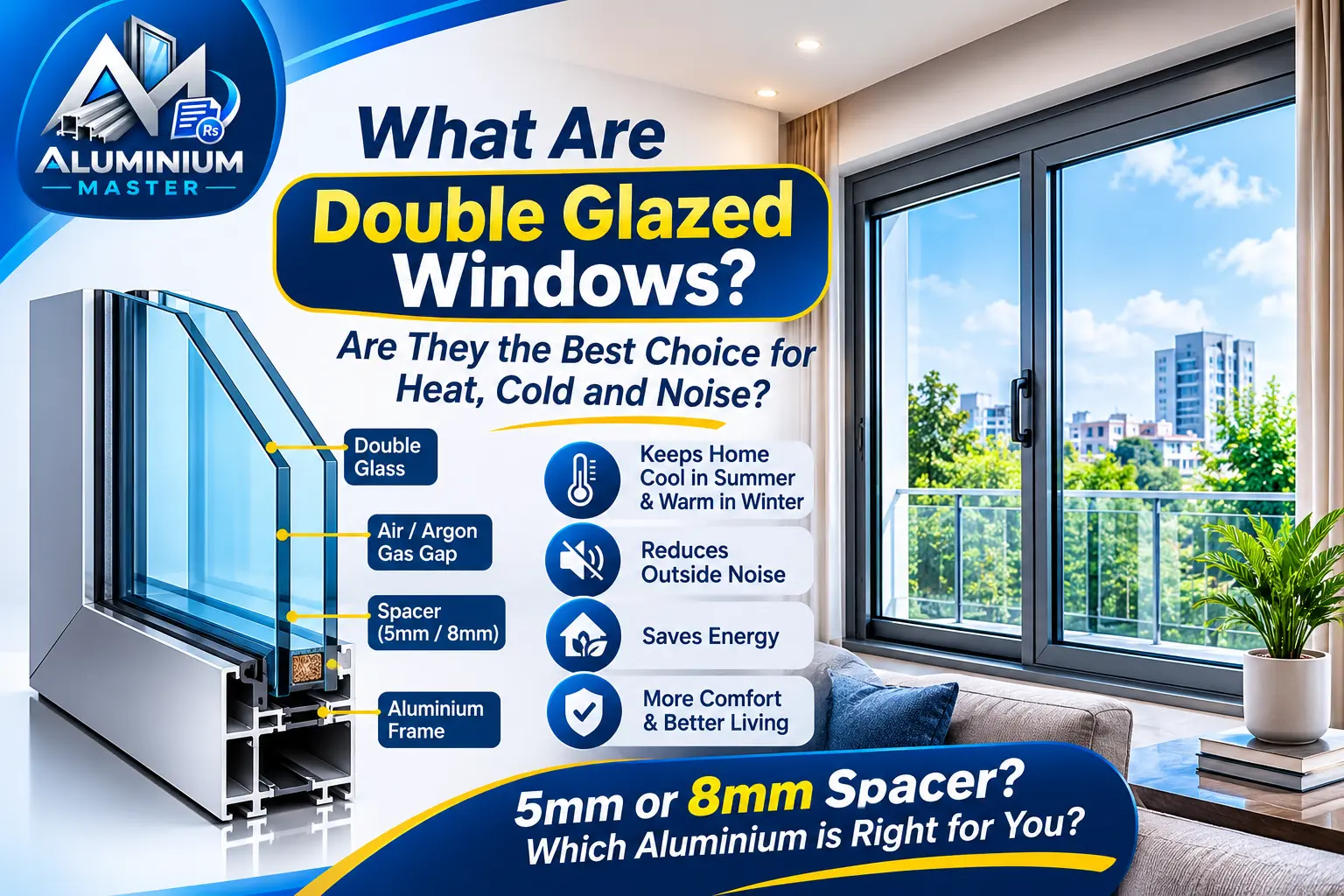
The two panes are fixed together with a set gap between them. This gap is held by a spacer, usually made of aluminium or another suitable material. The spacer creates a sealed space between the panes, which can be filled with air or with argon gas.
Inside the spacer is a desiccant, a moisture-absorbing material that keeps the air between the panes dry. Special sealants bond the two panes together and keep air and moisture out.
Together, these parts make a complete Insulated Glass Unit, or IGU. This unit is what we call double glazing.
A useful sign to know: if you ever see mist or water droplets between the two panes, the seal of the unit has failed and moisture has got inside.
2. The Main Benefit: Protection From Heat and Cold
The main purpose of double glazing is to protect the inside of your home from the extremes of the weather outside.
A single glazed window has only one pane, so heat passes between the room and the outside fairly easily. In a double glazed window, the sealed gap between the two panes slows this transfer of heat. This means:
- Less of the outside heat reaches the room in summer.
- The room holds its warmth for longer in winter.
- Air conditioners and heaters can work more efficiently.
- The temperature inside the room stays more stable.
Two panes of glass alone don’t guarantee the best results, though. The type of glass, Low-E coating, gas filling, the aluminium frame and the quality of installation all play a part.
The frame matters more than many people realise. Aluminium conducts heat well, so in a very hot or very cold climate, an ordinary aluminium frame can let heat through even when the glass is double glazed. Systems with a thermal break, an insulating strip built into the frame, reduce this.
For Pakistan’s summers, the glass itself also counts. Solar control or Low-E glass reflects a large part of the sun’s heat before it enters the room, which can make a bigger difference on a sun-facing wall than the second pane alone.
3. What Is the Difference Between a 5mm and an 8mm Spacer?
In our market, double glazing is made with two spacer widths: 5mm and 8mm.
The spacer holds the two panes apart. With a 5mm spacer the panes sit closer together; with an 8mm spacer the gap is wider, and there is more air or gas between them.
That extra gap is what slows heat down. Of the two, an 8mm spacer generally gives better insulation against heat and cold, so it is the better choice where comfort and energy saving are the main reasons for choosing double glazing.
A 5mm spacer makes a thinner, lighter unit. It suits sections with a narrower glazing space, and it can be a practical choice where the budget is tight or the section cannot hold a thicker unit.
The spacer you can use also depends on the aluminium section. The complete unit, two panes plus the spacer, has to fit the glazing space of the sash. Double glazing here is made with 5mm or 6mm glass, so the common unit sizes are:
- 5mm + 5mm spacer + 5mm = 15mm unit
- 5mm + 8mm spacer + 5mm = 18mm unit
- 6mm + 5mm spacer + 6mm = 17mm unit
- 6mm + 8mm spacer + 6mm = 20mm unit
A unit with one 5mm and one 6mm pane falls in between, and as explained below, this mix also helps reduce noise.
6mm glass is stronger and heavier than 5mm, so it is often used for larger windows. That extra weight is another reason to choose a section that can carry it.
So don’t decide on the spacer alone. Ask your window manufacturer which spacer suits your section, whether the unit is filled with air or gas, and how the complete unit performs.
4. Do Double Glazed Windows Reduce Noise?
Yes. Reducing outside noise is one of the main benefits of double glazing.
Suppose your house is on a main road, with horns, motorcycles and traffic all day. Or it is near a market, a school or a busy commercial area. That noise reaches inside and affects the whole house.
Well-designed double glazing can reduce this noise compared with a single glazed window. But two panes alone are not enough for good sound insulation. These also matter:
- Panes of different thickness, such as 5mm and 6mm, because two panes of the same thickness tend to let the same sounds through
- Laminated glass, which is one of the most effective ways to cut noise
- The right gap between the panes
- Airtight sealing, because sound travels through any gap around the sash
- Correct fitting of the window in the wall
If your house is near a busy road, make sound insulation one of your priorities when you order double glazing.
5. Which Aluminium Should You Use for Double Glazed Windows?
This is an important question, because a double glazed window carries much more weight than an ordinary one. It has two panes of glass, plus the spacer, sealant and other materials of the unit. All of this adds to the load on the sash and the sliding system.
You need an aluminium system that can carry this weight safely. In the market, heavy-gauge sections of 1.6mm and 2.0mm are generally preferred for double glazing, and good dedicated double glazing systems usually use sections of this kind.
Some local manufacturers also supply double glazing sections in 1.2mm. These should not be chosen only because they are cheaper or easier to find.
Aluminium Master’s view: If you have decided on double glazed windows, prefer a suitable, good quality 1.6mm or 2.0mm system. The final choice should still depend on the section design, the size of the window, the weight of the glass and the load the system is designed to carry.
To see how much extra weight double glazing puts on a window, read our guide on which aluminium thickness is best for windows.
6. How Much Do Double Glazed Windows Cost?
Double glazed windows cost more than single glazed windows, for several reasons:
- They use two panes of glass.
- They need a spacer, desiccant, gas filling, special sealant and other materials.
- They may need stronger aluminium sections, heavier rollers, better locks and other hardware.
All of this adds to the total cost. Double glazing usually costs considerably more than single glazing, and on some projects it can come close to double. This is not a fixed rule for every window. The real price depends on the type and thickness of the glass, the aluminium system, the spacer, the hardware, the design and the size of the window.
7. Design Options in Double Glazed Windows
Double glazed windows are not only about weather and noise. They can also look beautiful and modern.
Decorative grills and Georgian bars can be placed between the two panes to create patterns in the window, from simple lines to geometric designs in both traditional and modern styles. Because the bars sit inside the sealed unit, they stay clean and never need dusting. An 8mm spacer leaves more room for these bars than a 5mm one, so check with your manufacturer which bars fit your unit.
The colour of the glass matters here. With clear glass, the decorative bars and patterns between the panes stand out clearly. With blue, grey, green or other reflective and tinted glass, the design behind it becomes much less visible.
So if a decorative design is part of your plan, clear glass is a good choice.
8. Why Clear Glass and Elegant Curtains Are Becoming Popular
In modern homes, curtains are now given as much attention as the windows themselves. In large housing societies and modern houses, elegant curtains of fine design are common, and more people are pairing them with clear glass.
This keeps the interior decoration and the curtains on show. It is why many customers now prefer plain clear glass over coloured glass.
Still, the choice of glass should always depend on the design of the house, the direction of the sun, privacy and the need to save energy.
9. Does Every Home Need Double Glazed Windows?
The answer is not the same for every home.
If your house is in a place with intense heat, a lot of outside noise, or you simply want a steadier temperature indoors, double glazing is an investment worth considering.
If your budget is limited, your house is in a quiet residential area, and heat and noise are not serious problems, good quality single glazing can meet your needs.
When you decide, look beyond the initial price. Consider the electricity you may save over the years, your comfort and the overall environment of your home.
10. How Do You Find the Price per Square Foot?
Many customers want to know the per square foot rate of double glazed windows and how much their whole house will cost.
There is no single formula that gives an accurate price without the details. Aluminium sections from different companies differ in quality and thickness, and the type of glass, spacer, gas filling, hardware and design all change the price.
The best way is to contact an experienced aluminium window manufacturer with your window sizes and the design you want. If possible, invite them to visit your site, so they can take all the measurements and give you an estimate based on your actual needs.
Conclusion: Is Double Glazing a Good Investment?
If you want modern comfort in your home and better protection from the weather outside, double glazed windows can be an excellent choice. They help reduce heat and cold, limit outside noise and make the inside of the house more comfortable.
The best results come only when the glass, gas filling, spacer, aluminium section, hardware and installation are all of good quality. Two panes of glass alone do not make good double glazing. What counts is the quality of the complete system and how well it is made.
A good home is not only one that looks beautiful. It is one where you and your family can live in peace and comfort.
About Aluminium Master
Aluminium Master aims to give customers accurate information and practical guidance about aluminium windows and the glass industry, so they can choose the right materials and designs for their homes and commercial projects.
For more information, guidance and useful articles on the aluminium industry, visit www.aluminiummaster.com.